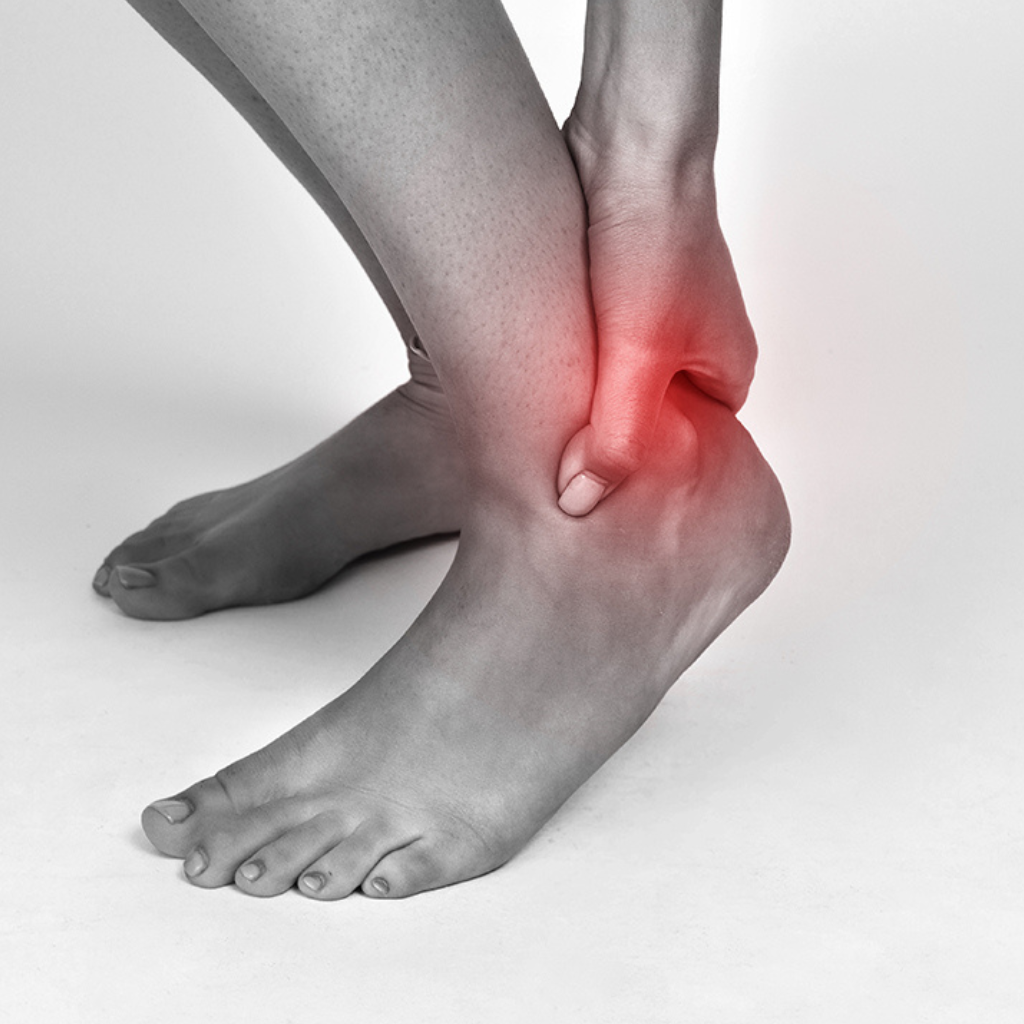
You are lying in bed at 2 AM and your feet just will not settle down. There is a strange tingling or buzzing feeling moving through your toes and into your arches. Sometimes it is more subtle. You step onto the bathroom floor and realize you cannot really feel the cold like you used to.
Most people ignore these signs. They think it is just tired feet or getting older. But sometimes your nerves are trying to tell you something is wrong.
Peripheral neuropathy is a condition where the nerves in your feet become damaged or irritated. It affects millions of people. The earlier you notice it, the more you can do about it. Here are five signs you should not ignore.
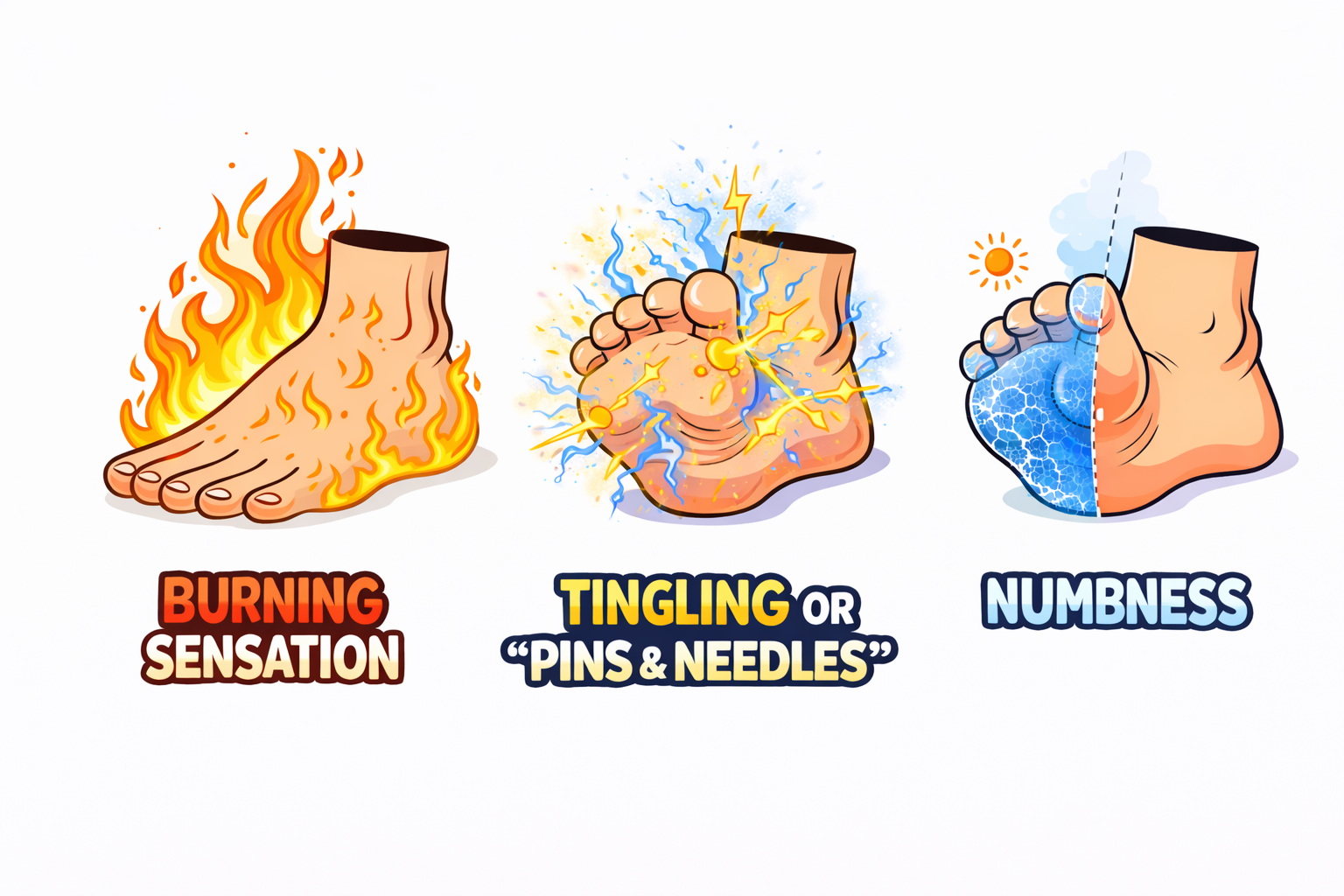
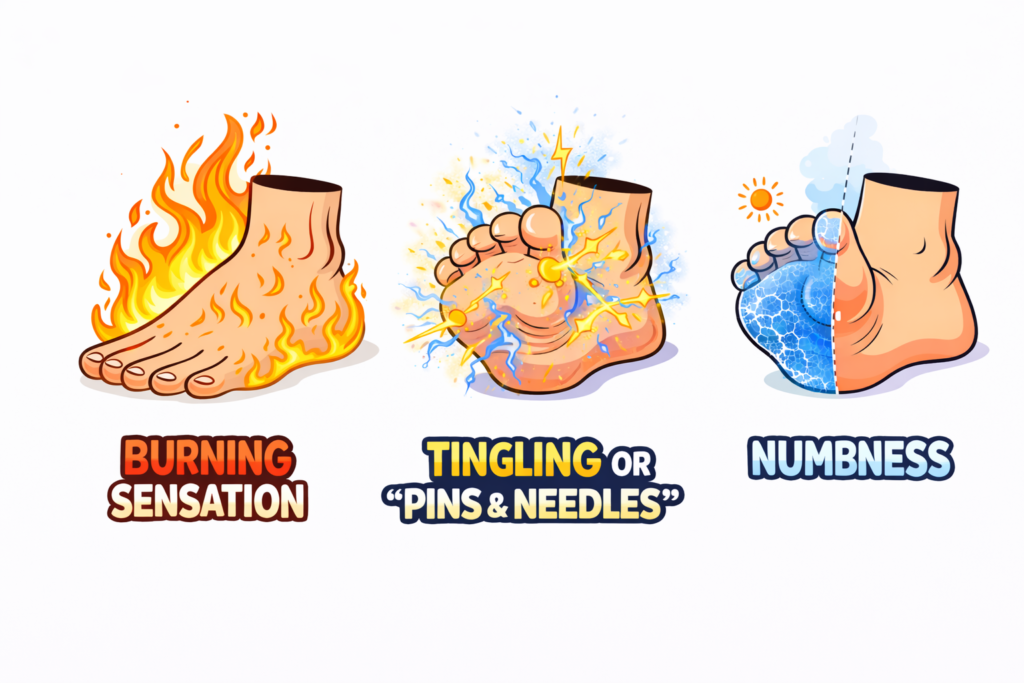
1. Tingling or “Pins and Needles” That Won’t Go Away
Everyone has experienced their foot falling asleep. You sit in an awkward position, blood flow is reduced, and after a few minutes everything feels normal again.
This is different.
With neuropathy, the tingling stays. It does not disappear when you move. It often shows up at night when you are trying to relax. Some people describe it as a constant buzzing or a vibration under the skin.
It usually starts in the toes and slowly moves upward. If this has been happening for more than a couple of weeks, it is worth paying attention to.
2. Burning Sensation in Your Feet
This can feel confusing at first. Your feet feel hot even though there is nothing causing it. Some people say it feels like walking on warm sand. Others describe it as a stronger heat sensation.
It often gets worse at night when everything is quiet and you are more aware of your body.
Many people think it is just a circulation issue. While circulation can play a role, a persistent burning feeling especially with tingling or numbness is often related to nerve problems.
3. Numbness or Loss of Feeling
This is the most concerning symptom.
Tingling and burning are uncomfortable, but numbness can be dangerous. When you cannot feel your feet properly, you stop noticing injuries.
A small cut, a blister from tight shoes, or even something stuck in your sock might go unnoticed. Over time, these small issues can turn into infections or more serious problems.
For people with diabetes, this risk is even higher because healing is slower. Losing your natural sense of protection in your feet is a major warning sign.
4. Balance Problems or Feeling Unsteady
Your feet are constantly sending signals to your brain about your position and movement. This helps you stay balanced without thinking about it.
When nerves are damaged, those signals become weak or unclear. You might feel unsteady, trip more often, or notice that your balance is not what it used to be.
This becomes especially important as you get older, since falls can lead to serious injuries.
5. Muscle Weakness in Your Feet or Legs
As neuropathy progresses, it can affect the nerves that control movement.
You may feel like your feet are heavier than usual. Walking might become harder. You could struggle to lift the front of your foot or notice that climbing stairs takes more effort.
This is a sign that the condition is progressing and needs attention.
When to See a Podiatrist
You do not need to have all of these symptoms. Even one or two that persist or get worse over time should be checked.
You may be at higher risk if you have diabetes, thyroid issues, or vitamin deficiencies like low B12. But neuropathy can affect anyone.
The key is not to wait. Early treatment can slow down the condition and improve your daily comfort.
Don’t Wait on This
If any of these signs sound familiar, pick up the phone. Call West Haven Foot & Ankle Center at 475-238-7400 or visit westhavenfootandankle.com/contact-us to book a free consultation.
Dr. Sean Lazarus specializes in diagnosing and treating neuropathy and the sooner we catch it, the more we can do to help.