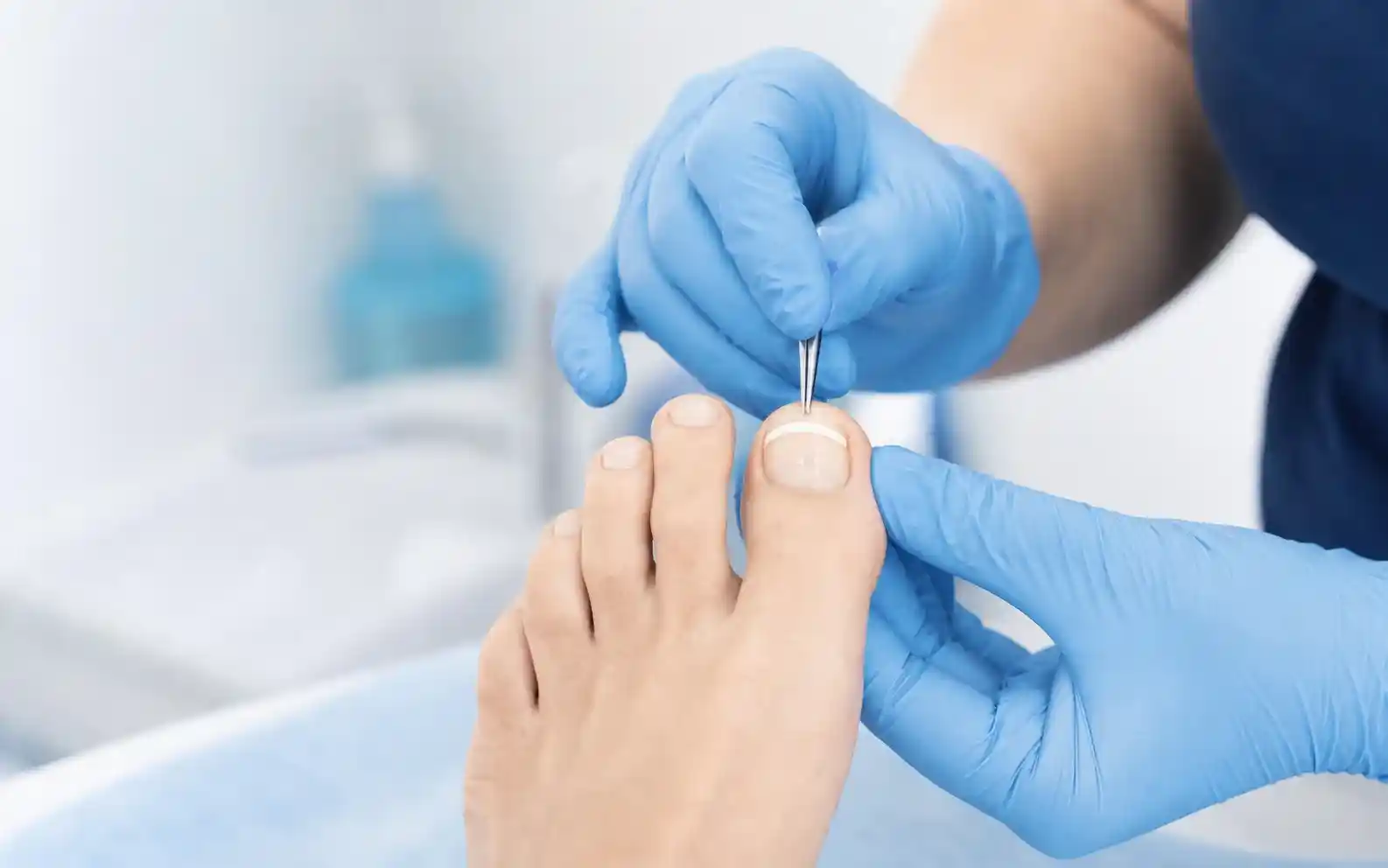

An ingrown toenail occurs when the side or corner of a toenail grows into the soft skin around the nail. It most often affects the big toe, but it can happen on any toe.
At first, the area may feel sore or sensitive. Over time, the skin can become inflamed, swollen, or infected. If the problem keeps returning, professional podiatry treatment may be needed to correct the nail edge and protect the surrounding skin.
Common symptoms include:
Ingrown toenails can develop for several reasons. Common causes include trimming toenails too short, rounding the nail corners, wearing tight shoes, toe injuries, naturally curved toenails, or repeated pressure on the toes.
Some patients are more likely to develop complications, especially those with diabetes, poor circulation, neuropathy, or a weakened immune system. If you have any of these conditions, it is important to have foot and nail problems checked early.
You should schedule an appointment if your ingrown toenail is painful, swollen, draining, infected, or keeps coming back. You should also see a podiatrist if the redness appears to be spreading or if walking has become uncomfortable.
Patients with diabetes, circulation problems, or nerve damage should not try to dig out or cut an ingrown toenail at home. Professional care can help prevent the problem from worsening.
Treatment depends on how severe the ingrown toenail is. Mild cases may be treated with careful nail care, pressure relief, and advice on proper trimming and footwear.
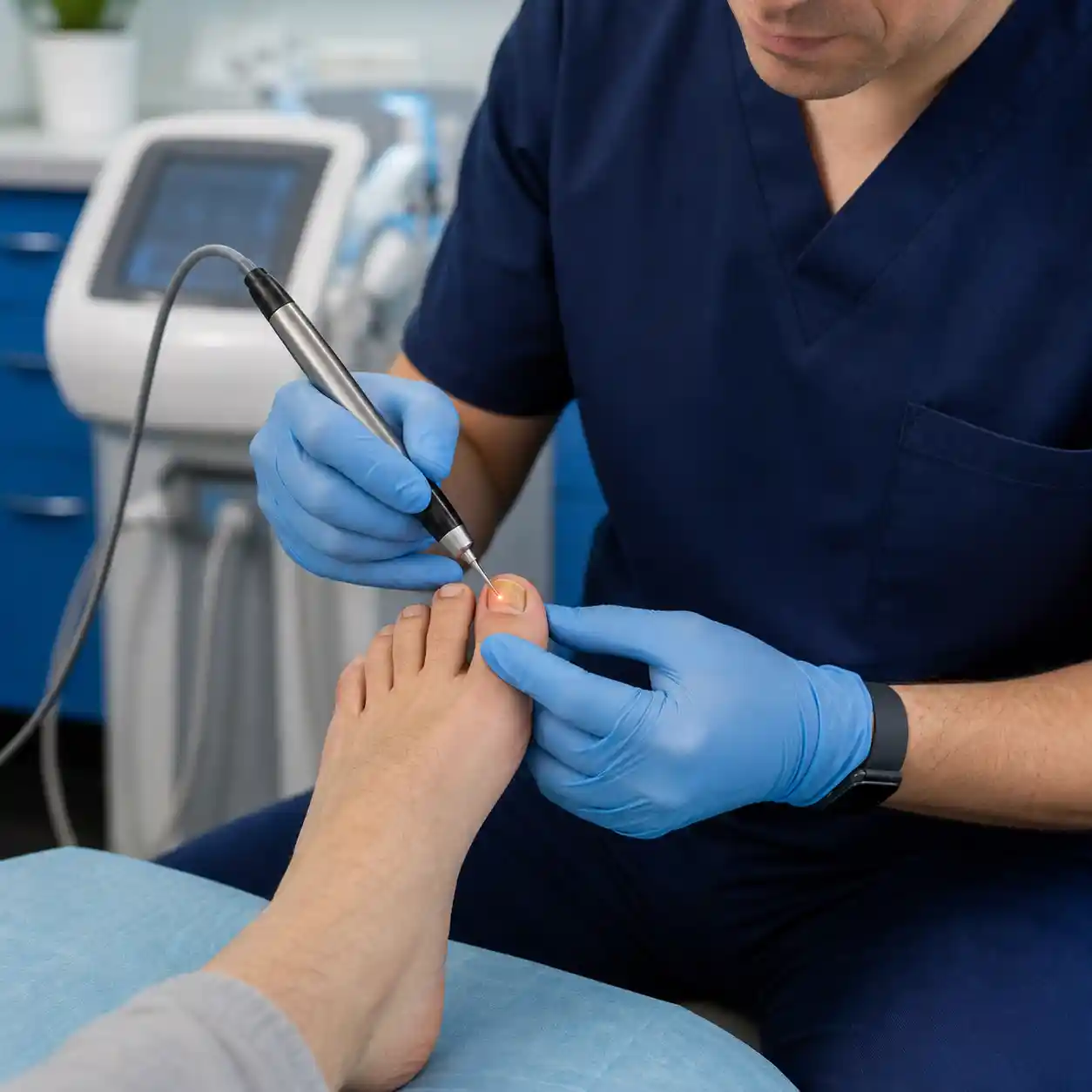
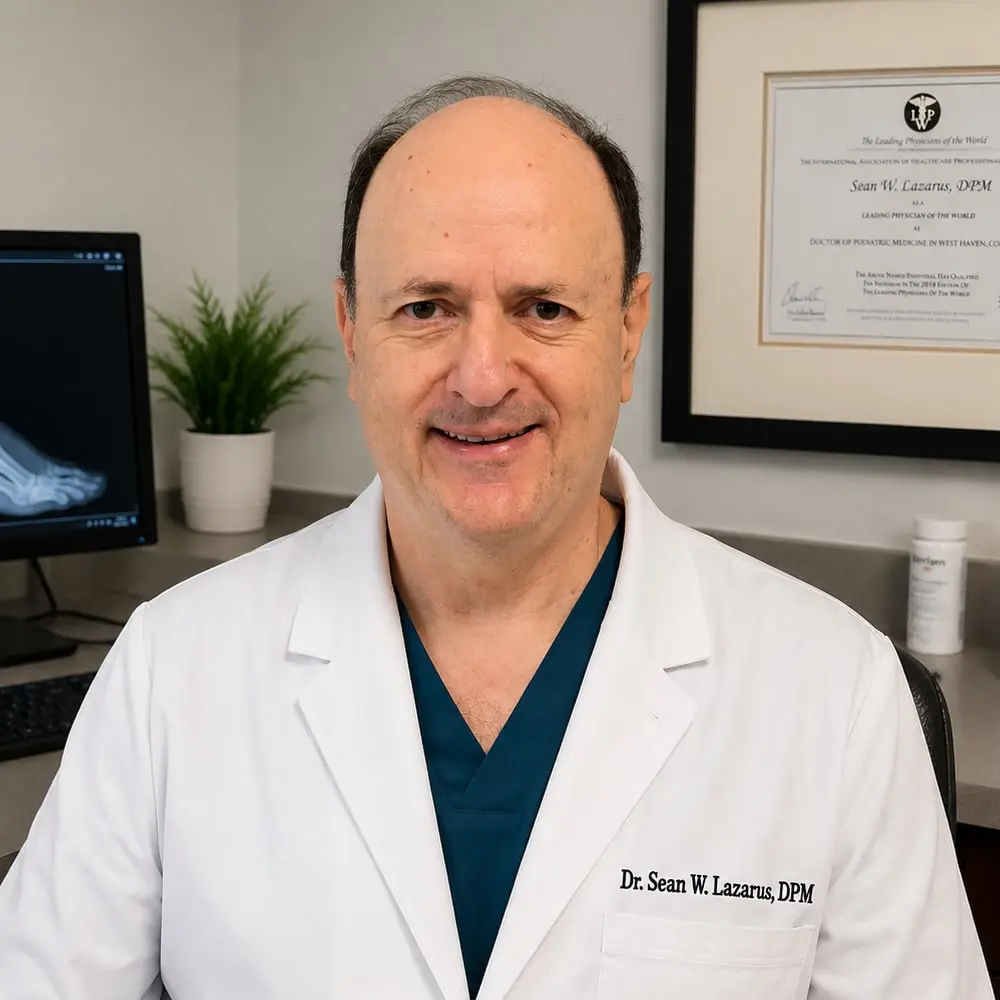
For painful, infected, or recurring ingrown toenails, Dr. Lazarus may recommend an in-office procedure to remove the small ingrown portion of the nail. The toe can be numbed first, making the treatment much more comfortable. In recurring cases, additional treatment may be discussed to help prevent that part of the nail from growing back into the skin.
Mild cases may improve with proper care, but painful, swollen, infected, or recurring ingrown toenails should be checked by a podiatrist.
If a procedure is needed, the toe can usually be numbed first. Most patients find treatment much more comfortable than living with the ingrown toenail pain.
No. Digging into the nail or cutting the skin at home can worsen the problem and increase the risk of infection.
Not always. Antibiotics may be needed if there is an infection, but the main issue is often the nail edge irritating the skin. A podiatrist can determine the right treatment.
Yes. Ingrown toenails can return if the nail shape, trimming habits, footwear, or pressure on the toe continue to cause irritation.
Please note that these FAQs provide general information and should not replace personalized advice from a qualified healthcare professional. It is important to consult with a trusted podiatrist to assess your individual case and determine the most suitable treatment plan for your ingrown toenail.